

Why The Room You’re In Might Be Capping Your Revenue
If you’ve ever left a mastermind or community call feeling supported but still unsure what to actually do on Monday morning, the room is not the problem you think it is. Most founder communities are strong on mindset, connection, and cheerleading, and nearly silent on the one topic that determines whether a business survives, which is revenue. That gap is more common than most business coaches for female entrepreneurs are willing to admit, and it is quietly shaping how fast, or how slowly, founders actually grow.
This week on The Boardroom Besties Podcast, Natalie Bernacchi walks through her own path from corporate isolation to cofounding an in person mastermind to building a community that finally treats mindset, strategy, and real revenue conversations as one connected system instead of three separate ones.
Table of Contents
- Why do so many founder communities avoid talking about revenue?
- Is isolation really a business risk?
- What makes a community actually function as a revenue system?
- How do you audit whether your current community is helping or hurting your growth?
- What does a community built on mindset, strategy, and community actually look like?
- FAQ
Why do so many founder communities avoid talking about revenue?
Most founder communities avoid revenue conversations because money still carries more social risk than almost any other topic women discuss openly, even among other business owners. It is easier to talk about energy and alignment than it is to say a specific number out loud in front of a room of peers.
Natalie experienced this firsthand across years of joining masterminds, memberships, and networking groups as both a member and as someone running her own room. Room after room was strong on one thing, connection, or mindset, or general business strategy, but nearly silent on actual revenue numbers, actual pricing decisions, and the mechanics of what makes a business sustainable rather than simply inspired.
According to Harvard Business Review, peer accountability groups consistently outperform solo goal setting because they introduce social commitment, a psychological mechanism that only works when the group is willing to track and discuss real outcomes, not just intentions. A room that avoids the outcome entirely forfeits the mechanism that makes peer support effective in the first place.
Most rooms are strong on one thing. Rarely are they strong on mindset, strategy, and revenue conversation all at once.
Is isolation really a business risk?
Yes, isolation functions as a measurable business risk for founders, not simply an emotional or personality-based experience, because it slows decision making, delays course correction, and removes the accountability that drives momentum.
When Natalie left corporate to build her own business after fifteen years scaling startups and running customer success teams, she assumed the hardest part would be strategy. It was not. The hardest part was making significant financial decisions with no one in the room who understood what was actually on the line. That isolation is not tied to being introverted or extroverted, it is tied to the structural absence of peers who are building at the same level and willing to engage with the real stakes.
This is one reason retention marketing strategy and community strategy overlap more than most founders realize. If you want more information on identifying where support gaps are showing up in your own business, explore The Boardroom Besties community, which is free to join for the entire month of September.
What makes a community actually function as a revenue system?
A community functions as a revenue system when it produces faster decisions, built-in accountability, and measurable business outcomes, not just emotional support.
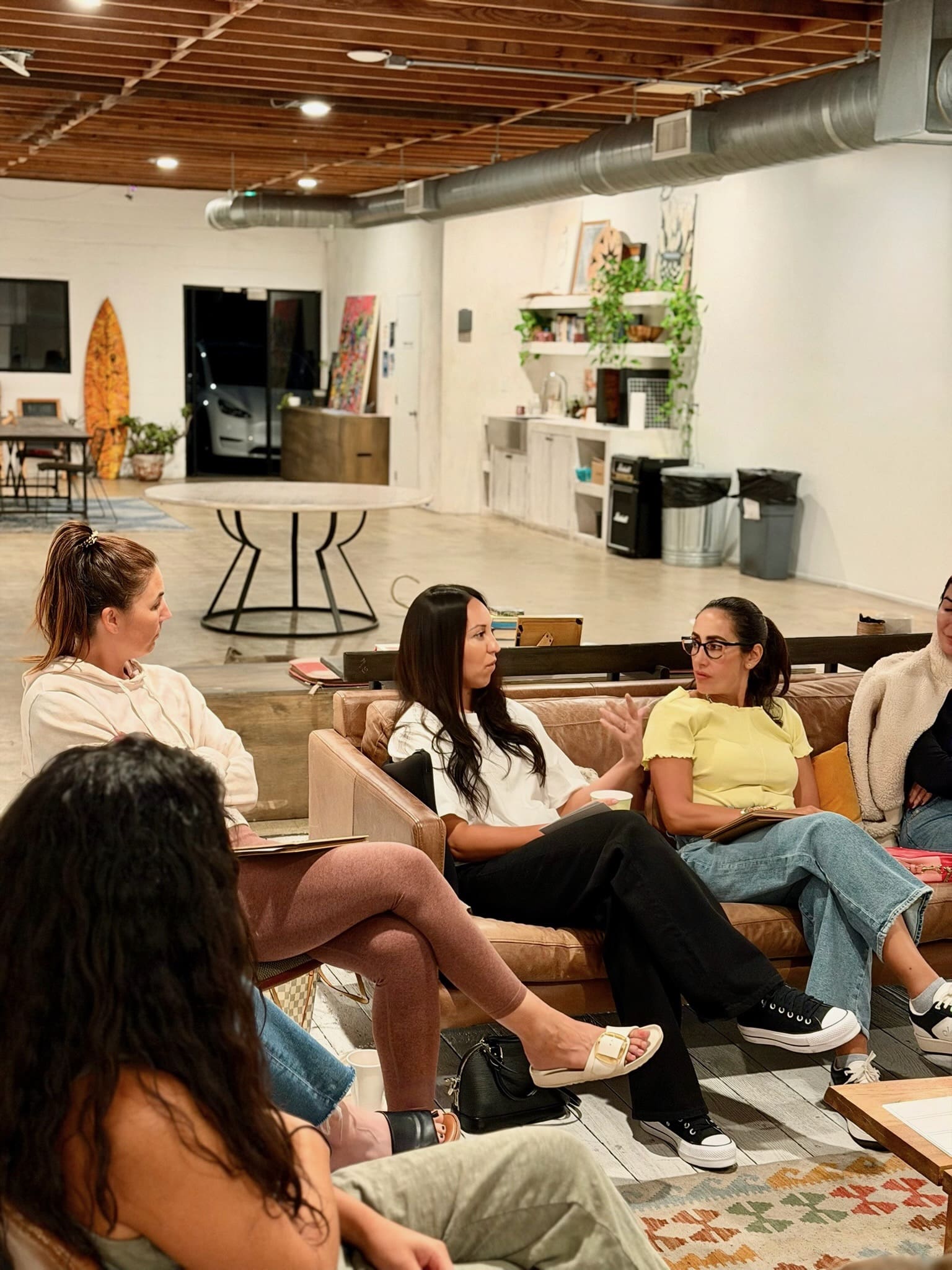
Natalie saw this directly while cofounding an in person mastermind of women entrepreneurs who met monthly. Founders solved problems in ten to twenty minutes that they had been stuck on for months, simply because someone else in the room had already lived through it or could offer a different perspective. Monthly reporting created accountability that working alone never replicates. Women in that room doubled their annual revenue, and some built entirely new businesses out of the inspiration and momentum of the group.
According to Bain & Company, increasing customer retention rates by just five percent can increase profits by twenty five to ninety five percent, a finding originally about client retention that maps directly onto founder communities. The value of keeping the right people in your orbit compounds in almost exactly the same way, whether those people are clients or fellow founders.
[MID-POST CTA: If you want a room built specifically around this kind of accountability, The Boardroom Besties is free to join for the month of September, with a live call every Wednesday.]
How do you audit whether your current community is helping or hurting your growth?
You can audit any community in under fifteen minutes by asking whether revenue, pricing, and real strategy get discussed openly, and by noticing how you feel the moment you leave.
Ask directly whether the conversation in your current rooms stays safely up in mindset and cheerleading, or whether it goes deeper into actual numbers and decisions. Then notice your own state after a call ends. Energized and sharper with a clear next action points to a room that is compounding your growth. Feeling entertained for an hour with nothing to act on points to a room that may be quietly capping it, however good the people in it are.
This single audit is one of the most useful tools available to any business coach for women who is trying to determine where her time is best spent this quarter, because time inside the wrong room is time not spent building revenue systems that actually move the business forward.
What does a community built on mindset, strategy, and community actually look like?
A community built correctly treats mindset, strategy, and community as one connected system, because removing any single piece caps what the other two can produce.
Mindset without strategy becomes motivation with nowhere to go. Strategy without community becomes a plan executed entirely alone, with no one to catch blind spots or provide accountability. Community without strategy becomes a group that feels good but never actually moves the needle. Put all three together, and founders end up supported, sharp, and growing real revenue at the same time, which is the exact model The Boardroom Besties was built around.
If you have been searching for a business coach for female entrepreneurs who treats revenue conversation as a core, non-negotiable part of community rather than an awkward afterthought, The Boardroom Besties Podcast and its companion community were built with exactly that gap in mind.
Key Takeaways
▸ Isolation is a measurable business risk, not a personality trait, and it slows revenue growth whether you notice it or not
▸ Most founder communities are strong on mindset or connection and nearly silent on real revenue conversation
▸ A community that produces faster decisions and real accountability functions as an actual revenue system, not just emotional support
▸ You can audit any community in fifteen minutes by asking whether revenue and strategy get discussed openly and noticing how you feel after each call ▸
Mindset, strategy, and community only compound growth when all three exist together in the same room
FAQ
Why do most masterminds avoid talking about money? Money carries more social risk than most other business topics, so many communities default to mindset and encouragement, which feels safer even though it does less to move the business forward.
Is entrepreneurial isolation really a business risk? Yes. Isolation slows decision making and removes the accountability that drives momentum, which directly impacts how quickly a founder can grow her revenue.
What should I look for in a business coach for female entrepreneurs? Look for a coach or community that treats mindset, strategy, and real revenue conversation as connected, rather than offering only emotional support or only tactical advice in isolation.
How do I know if my current mastermind or community is actually helping my business? Notice whether you leave each call with a specific action you can take that week, and whether revenue and pricing get discussed openly rather than staying at a surface level.
What makes The Boardroom Besties different from other founder communities? It was built specifically to combine mindset, strategy, and community in one system, with dedicated calls for both mindset and business strategy every month, rather than treating them as separate offerings.
Listen to the Full Episode
This post is the companion piece to The Boardroom Besties Podcast episode “Why This Podcast Is Now The Boardroom Besties, And The Real Story Of How I Built The Room I Wished Existed.” Listen to the full conversation on Spotify or Apple Podcasts for the complete story behind the rebrand.
Ready to Find Your People?
If this post named something you have been feeling in your own founder journey, The Boardroom Besties is open and free to join for the entire month of September, no card required. The first call is September 2nd, with live calls every Wednesday at 10am Pacific and 1pm Eastern. Join here.
For more from Natalie Bernacchi, including past episodes of The Boardroom Besties Podcast, visit nataliebernacchi.com, and get The Boardroom Weekly newsletter delivered to your inbox at nataliebernacchi.com/newsletter.
Leave a Reply Cancel reply


Tune into Podcast
Work with Me
If you’re craving real momentum and mentorship to match your ambition, you don’t have to do it alone. Whether you're looking for personalized coaching or inspiring conversations that light you up each week, there’s a next step waiting for you.
Explore private coaching containers that meet you where you are and stretch you toward who you're meant to become.
Prefer to start with inspiration? Tap into raw, unfiltered conversations inside the The Boardroom Besties podcast and see what's possible for you one episode at a time.
Step Into the Next Level You
Powerful Support + Strategy to Grow
the Business and Life You Crave
© 2026 Natalie Bernacchi Consulting
